Since the start of the year, I have been really leaning into exploring the parts of my personality that I would rather not look at—the parts I’m shameful or embarrassed about, and the ones that I try to hide or keep at bay but always, always show up at some point in my relationships.
Read MoreI want to talk about anxious attachment behaviors, impulses, and tendencies. I remember viscerally how it feels to be in relationship with someone who leans toward the avoidant end of the relational spectrum as a person who has the anxious style—and I would describe it as torturous at times, to be completely honest.
Read MoreI have been thinking a lot about how I used to think I had to hold space for EVERYTHING. It wasn't long ago that my boundaries were messy and I was overly accommodating. I caused myself a significant amount of anxiety (not to mention drama and ways to keep myself busy) by engaging in relational dynamics that were unhealthy and unpredictable.
Read MoreNow that I’ve done this work for a while, I’m able to see that there are a lot of different ways to utilize attachment theory. I think the most effective way to utilize attachment theory is using approachable and inclusive materials, dropping in to the body, and creating resources and strategies that build a felt sense of safety.
Read MoreThe Pay What You Please Online Course Sale is happening NOW through Sunday, April 24!
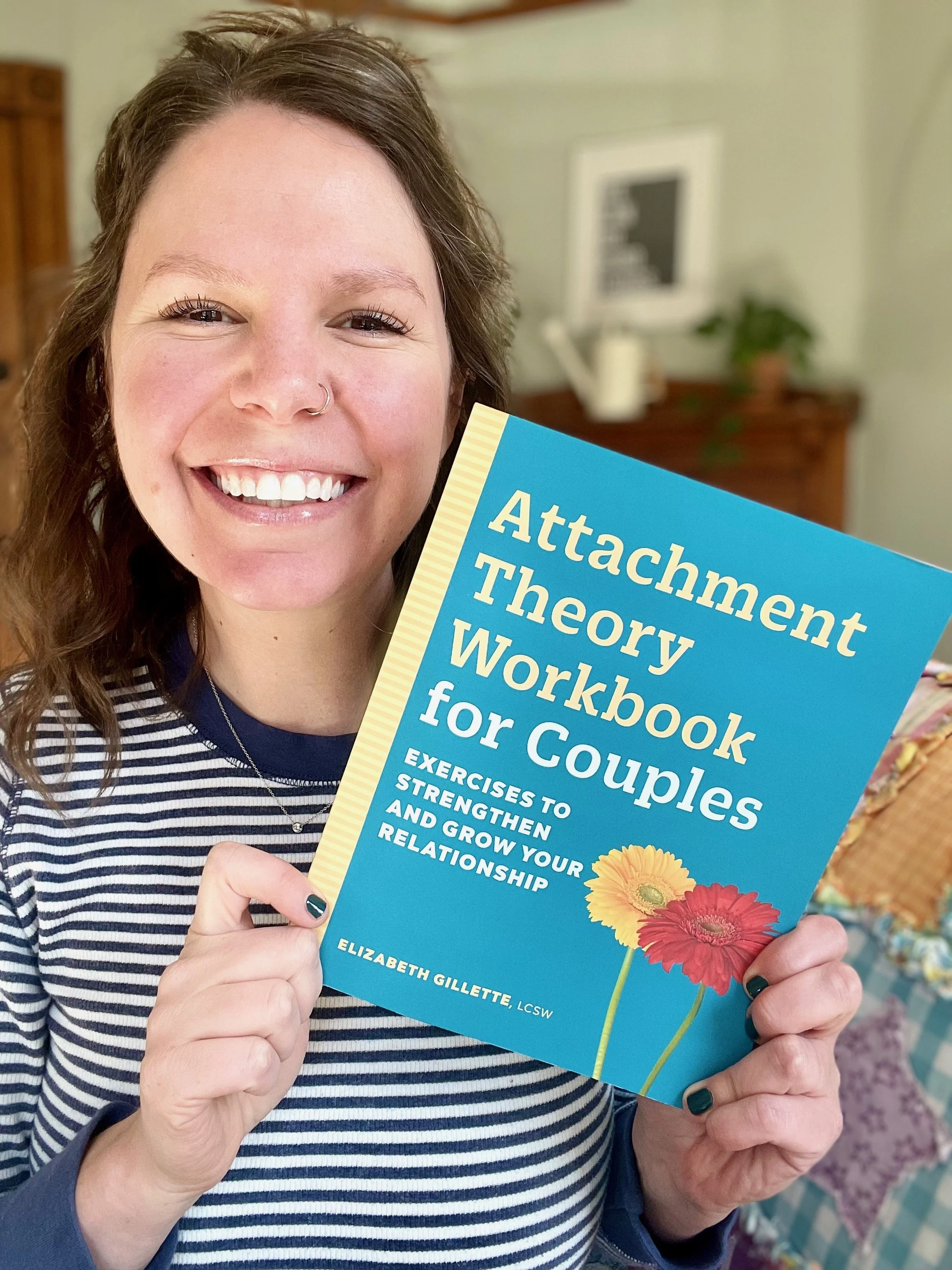
Read MoreI have been dreaming about sharing some big news with you for months, and I am finally able to tell you! I’m just going to get right into it:
I wrote a book!
One of the most frequently asked questions I receive as an attachment therapist is how to navigate the infamous anxious-avoidant relationship pattern. It’s a tricky one and I know from experience how challenging it feels to love someone so much and also feel unclear about how to approach your relationship and your partner. This dynamic can bring a lot to the surface for both partners, so I believe it’s a real opportunity to do our personal attachment work and bring that to our relationship.
Read MoreToday I want to talk a bit about boundaries in relationships—specifically, being part of a relationship where boundaries are challenging for all involved.
A lovely person on Instagram requested that we explore how to navigate a partnership where both families of origin experienced enmeshment.
Read MoreRelationship structures continue to evolve. As people become more conscious and aware of how they show up in relationships and the work good relationships require, I see folks becoming more creative in the ways they get their needs met and how they meet their partners needs. The concept of nonmonogamy is not new by any means, but the words “open relationship” and “polyamory” are making their way into mainstream conversations about love, attachment, and partnership more and more often.
Read MoreNo matter how it happens, break-ups are usually hard. Even if there is an element of relief or celebration or freedom, seeing another person saddened and hurt is hard to take, especially when that person is our partner. In long-term relationships, we become good friends, even best friends. We grow, and we change each other every day. Our own attachment beliefs, needs, and traumas are triggered within our relationship patterns and can cause us to stay in a relationship that is no longer fully joyful, healthy, or happy for us. Sometimes we are ready to put in the work that relationships require, and we are committed to doing that; but today I’m talking about relationships whose time has passed and the end is overdue for one or both of us.
Read More